TDS stands for Total Dissolved Solids — the total amount of minerals, salts and other substances dissolved in water. It is usually measured in milligrams per litre (mg/L), also written as ppm.
Why TDS matters
- High TDS can make water taste salty, bitter or hard and can leave scale on utensils.
- The Indian drinking-water standard (BIS IS 10500) gives 500 mg/L as the acceptable limit for TDS.
- TDS is one of the main factors that decides whether you need an RO purifier.
TDS isn’t everything
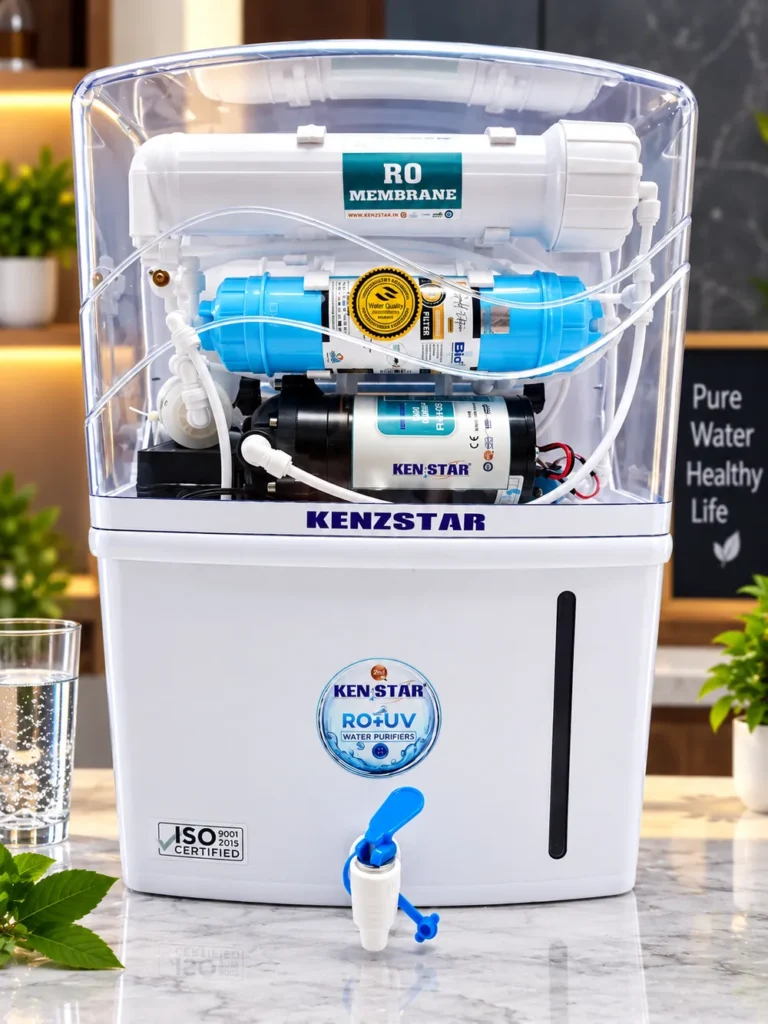
A TDS reading tells you how much is dissolved in the water, not exactly what it is. Water with acceptable TDS can still contain microorganisms, which is why stages like UV are used as well. A TDS controller, as in KenzPure Pro, helps keep useful minerals in the purified water.